Beauty Products · Sacramento, CA
Styling Tools & Hot Tools in Sacramento
Salon-grade styling tools and hot tools in Sacramento — dryers, flat irons, and curling tools, plus the heat protectants and stylers that help you get a professional finish without damaging your hair.
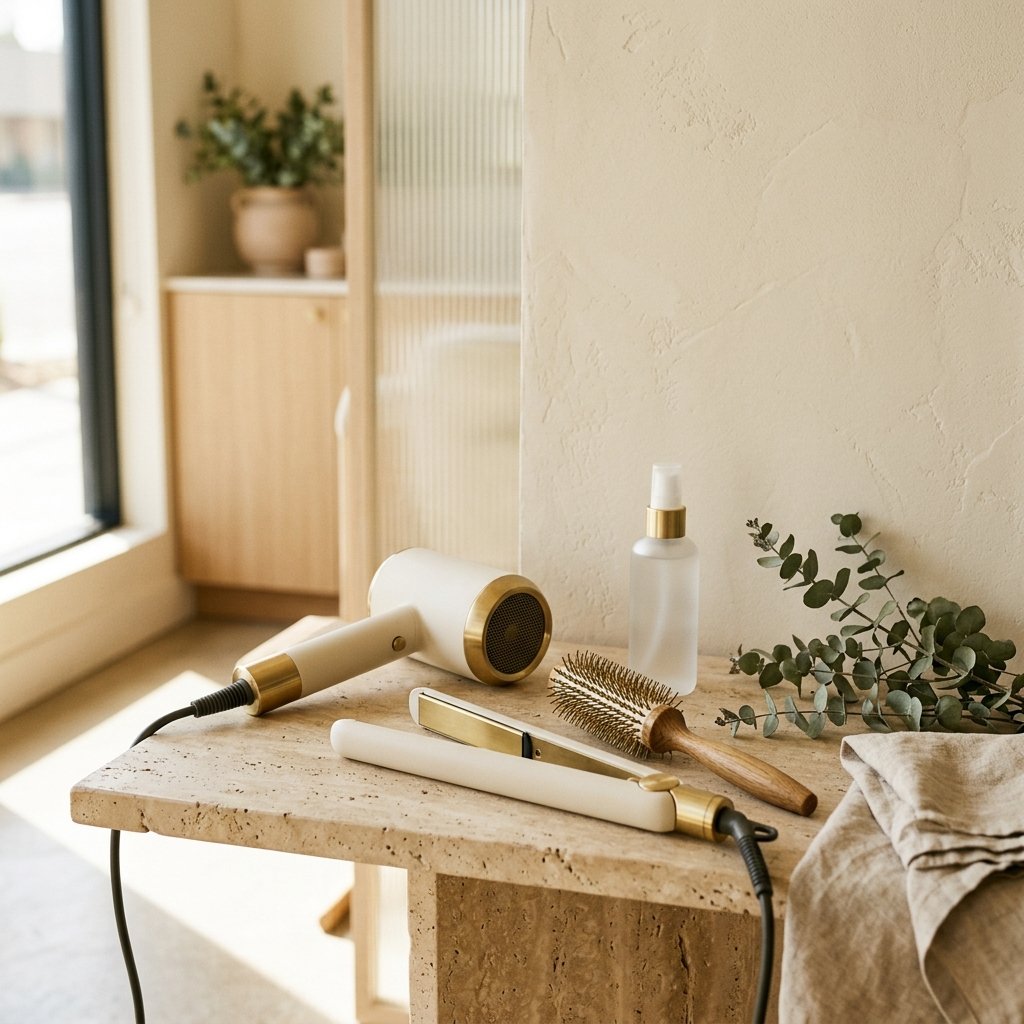
Styling tools and hot tools are the dryers, flat irons, curling irons and wands, and brushes you use to shape and finish your hair at home — along with the heat protectants and styling products that make them work safely. Salon-grade tools differ from drugstore versions in the technology that controls heat and how evenly they distribute it, which directly affects how fast you can style, how well the style holds, and crucially how much damage the heat does along the way.
The reason this category sits on our shelf is simple: most of the in-salon finish people love comes down to the right tool used correctly, plus a heat protectant. We carry tools we trust and the protective products that should always go with them, because a great hot tool without heat protection is one of the faster ways to undo color and break down hair. The goal is to get you a professional finish at home without paying for it in damage.
What better tools and protectants do and why it matters
The most important difference in a quality hot tool is consistent, controllable heat. Cheap irons run hotter than their dials claim and cycle unevenly, which forces you to make repeated passes over the same section — and every extra pass at too-high a temperature is direct damage. A good tool holds an accurate temperature and distributes it evenly, so you style each section once at the lowest effective heat, which is far gentler on color and on the hair’s structure.
Adjustable temperature is part of that: fine or fragile hair needs much lower heat than coarse, thick hair, and a tool that only runs hot gives you no way to protect delicate hair. Materials matter too — well-made plates and barrels glide rather than snag, reducing the mechanical stress that frays the cuticle. The cumulative effect of a better tool is less time styling, less heat exposure, and a finish that holds longer, all of which protect both your hair and your color.
Heat protectant is the non-negotiable companion. Applying heat to unprotected hair scorches the cuticle, fades color fast, and is one of the most common causes of the dry, frizzy, broken ends people blame on coloring. A heat protectant forms a barrier that buffers the hair from direct heat and often adds smoothing and UV benefits on top. In Sacramento’s sun, that UV protection is a genuine bonus — your color is getting hit from the iron and the sky, and the right styler defends against both.
Who styling tools and hot tools are for
Anyone who heat-styles regularly benefits from a quality tool and a heat protectant, but it is especially important for people with color-treated, lightened, fine, or already-damaged hair, where excess or uneven heat does the most harm. If you straighten or curl most days, upgrading to a tool with accurate, adjustable temperature is one of the better investments you can make in your hair’s long-term health, not just your daily look.
It is also worth it for anyone frustrated that their style does not hold or takes forever to achieve — those problems are often the tool, not the technique. The flip side is honesty about heat in general: the gentlest thing you can do is style with heat less often and at lower temperatures, and we would rather coach you toward that than sell you a tool you will overuse. For people trying to recover damaged hair, sometimes the best advice is fewer hot-tool days, full stop.
How to use them and what we recommend
Always apply a heat protectant to damp or dry hair before any hot tool, and make sure hair is fully dry before using a flat iron or curling iron — ironing damp hair effectively boils the water inside the strand and causes serious damage. Use the lowest temperature that actually achieves your style; for fine or color-treated hair that is often much cooler than people assume, and starting low and only increasing if needed protects the hair. One slow, deliberate pass beats several fast ones.
Match the tool to the job and the hair: a smaller barrel for tighter curls, a wider one for loose waves, a dryer with adjustable heat and a concentrator nozzle for smoothing. Let tools cool and keep plates clean so product buildup does not bake onto the hair. We recommend tools and protectants based on your hair type and how you actually style — and if your real need is to reduce heat damage, we will say that too, because the best result for your hair sometimes means using the tool less, not buying a fancier one.
What affects the cost
Styling tools span a wide price range depending on the heat technology, temperature control, build quality, and brand, while heat protectants and stylers are priced like other professional products by line and size. A quality hot tool costs more upfront but tends to last longer, style faster, and damage less than a cheap one that has to be replaced and harms your hair in the meantime. Exact prices are in-salon, and we will steer you to the tool and protectant that fit your hair and habits.
Styling Tools & Hot Tools is one of the beauty products services we offer in Sacramento. To weigh your options, see the rest of our beauty products services beyond styling tools & hot tools.
Styling Tools & Hot Tools: questions we hear in Sacramento
Are expensive hair tools actually worth it?
For regular heat-stylers, a quality tool is usually worth it because it holds an accurate, even temperature, so you style each section once at lower heat instead of making repeated damaging passes. That means less damage, faster styling, and a longer-lasting finish. Cheaper tools often run hotter than their dials claim and cycle unevenly. The key features to pay for are accurate, adjustable temperature and good plate or barrel materials.
Do I really need a heat protectant?
Yes — a heat protectant is essential any time you use a dryer, flat iron, or curling iron. Direct heat on unprotected hair scorches the cuticle, fades color quickly, and is a leading cause of dry, broken ends. A protectant forms a buffer between the heat and your hair and often adds smoothing and UV benefits. It is one of the highest-impact products you can use, especially on color-treated hair.
What temperature should I use on color-treated hair?
Use the lowest temperature that actually achieves your style, which for fine or color-treated hair is often much cooler than people assume. Start low and increase only if needed rather than defaulting to the highest setting. High heat fades color and damages already-processed hair fastest, so accurate, adjustable temperature control matters more than raw power. Your stylist can suggest a safe starting range for your hair.
Can I use a flat iron on damp hair?
No — never use a flat iron or curling iron on damp hair, because the heat effectively boils the water inside the strand and causes serious damage. Hair must be fully dry before using a hot iron. Only certain dryers and specific wet-to-dry tools are designed for damp hair, and even then a heat protectant is essential. Drying first, then ironing with protection, is far safer for your hair and color.
Let’s book your styling tools & hot tools.
Online booking takes a minute — or call the Sacramento studio.